

Heavy rain can push outdoor roaches toward dry shelter
If a large roach appears inside after a storm, the rain may be part of the explanation. Heavy water can flood or saturate the outdoor places where several cockroach species normally live, including mulch, leaf litter, crawl spaces, storm drains and areas around decaying wood. The insects then move toward higher, drier shelter and may enter nearby buildings.
That pattern is common across Augusta, Evans, Martinez, Grovetown, North Augusta and Aiken, where warm temperatures and moisture support cockroach activity for much of the year. Rain does not create adult roaches overnight. It changes their environment and can make existing outdoor populations suddenly more visible indoors.
If roaches are already appearing in your home, request a local inspection and quote.
A large roach is not automatically a German roach infestation
The type of cockroach matters. American cockroaches are large, reddish brown insects that often occupy sewers, crawl spaces, basements and other damp areas. Smokybrown cockroaches are dark brown and commonly live outdoors around tree holes, roof gutters, mulch and wood piles. Either may wander indoors after heavy rain or during hot, dry weather.
German cockroaches are different. They are smaller, tan to light brown and have two dark parallel stripes behind the head. They usually live and reproduce inside kitchens, bathrooms and other areas close to food, warmth and water. A recurring German roach problem is not simply a storm-driven visitor and generally requires a focused German cockroach treatment plan.
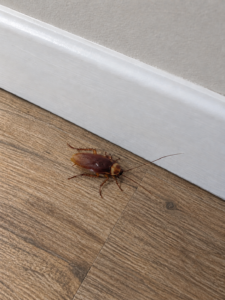
Where rain displaced roaches enter CSRA homes
Roaches can flatten their bodies and use surprisingly small openings. Common entry points include gaps beneath exterior doors, worn garage seals, cracks around utility lines, foundation openings, crawl-space access doors, roofline gaps and unscreened vents. Floor drains and plumbing penetrations can also provide routes from damp voids into living areas.
Exterior conditions matter too. Mulch piled against the foundation, leaves held in gutters, firewood beside the house and leaking irrigation can maintain the moisture and shelter roaches need. Exterior lights may attract other insects and can contribute to activity near doors, where roaches have more opportunities to slip inside.
What homeowners should do after a storm
Start by removing the individual roach with a vacuum or other direct method, then inspect the nearby entry point. Replace damaged door sweeps, seal accessible gaps around pipes and keep crawl-space doors and vents in good repair. Correct leaks, clear gutters and move firewood or dense debris away from the structure.
Inside, store food in sealed containers, clean grease and crumbs from beneath appliances and avoid leaving pet food out overnight. Fix dripping faucets and dry water around sinks. These steps do not guarantee that an outdoor roach will never wander inside, but they reduce the food, water and shelter that allow a temporary visitor to remain.
Avoid relying on repeated aerosol spraying as the only response. Sprays may kill a visible insect without correcting the entry point or hidden habitat. Clemson Cooperative Extension and the EPA’s integrated pest management guidance emphasize sanitation, moisture correction, exclusion and targeted control rather than one tactic alone.
When one roach suggests a larger problem
One large roach immediately after a major storm may be an outdoor invader. Repeated sightings, daytime activity, droppings, egg cases or small roaches of different sizes suggest that the problem deserves a closer inspection. Seeing roaches in several rooms or continuing to see them long after the weather dries is another reason to investigate.
A professional inspection can identify the species, look for moisture and entry points and determine whether the source is indoors, outdoors or in a crawl space. Stokes provides roach treatments and ongoing general pest control throughout the CSRA service area, with recommendations based on the pest and the property rather than the weather alone.
Frequently Asked Questions
Why do roaches come inside after heavy rain?
Saturated soil, flooded drains and wet outdoor harborages can displace cockroaches and send them toward higher, drier shelter.
Does one large roach mean my house is infested?
Not always. A single large outdoor species after a storm may be a temporary invader. Repeated sightings, small roaches, droppings or egg cases are more concerning.
Are palmetto bugs and cockroaches the same thing?
Palmetto bug is a common regional name usually applied to large cockroach species, including American or smokybrown cockroaches.
Why am I seeing roaches during the day?
Daytime activity can occur when a roach has been displaced, but frequent daytime sightings may also indicate crowding or a larger hidden population.
What is the best way to keep roaches out?
Combine exclusion, moisture correction, sanitation and targeted treatment. Sealing gaps without correcting food and water sources may not be enough.
