

Common Household Pests in the CSRA and Why They’re So Active Around Augusta and North Augusta
Homeowners throughout the Central Savannah River Area deal with pest problems far more often than people in cooler parts of the country. Communities across Augusta, North Augusta, Evans, Martinez, Grovetown, and Aiken all share the same warm, humid climate that allows insects and other pests to stay active for most of the year.
The Augusta area has a humid subtropical climate with long summers and relatively mild winters. Average summer temperatures regularly reach the 90s, and the region receives roughly 45 inches of rainfall each year. Those conditions create an ideal environment for many pest species to survive and reproduce.
Because of this climate, homeowners across Richmond County, Columbia County, and Aiken County commonly encounter pests like ants, cockroaches, spiders, and stinging insects around their homes. Once these pests establish themselves near a property, they often only need small structural openings to move indoors.
Understanding why pests are so common in the CSRA and how they typically enter homes can help property owners take steps to prevent infestations before they start.
Why Pest Problems Are So Common in the CSRA
The Augusta metropolitan area sits along the Savannah River and includes a combination of wooded land, suburban neighborhoods, and older residential areas. This mix of environments provides ideal habitats for insects and other pests.
Warm temperatures allow insects to reproduce multiple times during the year, while high humidity helps many pests survive indoors. Tree cover and dense vegetation around homes also provide shelter for insects before they eventually move inside structures in search of food or water.
Many neighborhoods in Evans, Martinez, Grovetown, and North Augusta also include landscaped yards, irrigation systems, and shaded areas that maintain moisture in the soil. These conditions create favorable environments for insects such as ants and cockroaches to establish colonies close to homes.
When pest populations increase outdoors, it becomes much easier for them to find their way inside.
Ant Problems Homeowners See Most Often
Ant infestations are one of the most common pest complaints among homeowners throughout the CSRA. Residents in communities like Evans and Martinez often experience seasonal ant activity around their homes, while older neighborhoods in Augusta and North Augusta frequently see ants entering through foundation cracks and gaps.
Several species are common in the area, including red imported fire ants, odorous house ants, pavement ants, and carpenter ants.
Fire ants are a major concern for homeowners throughout the CSRA. Red imported fire ants are common across the southeastern United States and are known for building large mound-shaped nests in lawns, gardens, parks, and open fields. This is noticed often times after a heavy rain. These ants are especially aggressive and will swarm quickly if their mound is disturbed. Unlike many other ant species, fire ants deliver painful stings that can cause burning sensations and raised welts, and some individuals may experience allergic reactions. Fire ant colonies can contain hundreds of thousands of ants and may spread rapidly across a property if left untreated. Lawns with full sun, moist soil, and open turf areas often provide ideal nesting conditions, which is why many residential yards in the CSRA experience recurring fire ant activity during the warmer months.
Other ants can be a nuisance as well such as odorous house ants which are often attracted to sugary foods and are commonly found in kitchens and pantries. Pavement ants typically build nests in soil near sidewalks, driveways, and home foundations. They often enter homes through small cracks in concrete or masonry.
Carpenter ants are larger and create nesting galleries in damp or damaged wood. Although they do not consume wood like termites, their tunneling can weaken structural materials over time. Homes located near wooded areas in Martinez, Evans, and Aiken often experience more carpenter ant activity because these environments provide natural nesting sites.
Cockroaches Thrive in Warm, Humid Homes
Cockroaches are another pest that thrives in the warm and humid conditions found throughout the CSRA. Homes across Augusta, North Augusta, and surrounding communities frequently encounter both American cockroaches and German cockroaches.
American cockroaches are large reddish-brown insects sometimes referred to as palmetto bugs. They are often found in crawl spaces, basements, sewer systems, and other damp areas before entering homes.
German cockroaches are smaller but reproduce very quickly. A single female German cockroach can produce thousands of offspring in a single year, which allows infestations to grow rapidly if they are not addressed early.
Cockroaches are typically attracted to food residue, grease buildup, and moisture. Kitchens, bathrooms, laundry rooms, and areas behind appliances are common locations where roaches hide inside homes.
Noticing unwanted pests? Contact us for bi-monthly or quarterly general pest services and stay bug free year round!
Why Spiders Often Appear Indoors
Spiders are another pest commonly encountered inside homes across the Augusta area. Although most spiders found in the CSRA are harmless, they can still make homeowners uncomfortable.
Spiders typically enter homes in search of prey, which means their presence often indicates that other insects are already nearby. Common spider species in the region include wolf spiders, cellar spiders, and house spiders.
Although most spiders found inside homes are harmless, the Southeast is also home to black widow spiders. These spiders typically live outdoors in dark, sheltered areas such as sheds, crawl spaces, and wood piles, and encounters inside homes are relatively uncommon as black widows are shy and avoid humans.
Homes located near wooded areas in Aiken, Grovetown, and parts of Martinez and Evans often see higher spider activity because outdoor insect populations are greater in these environments.
Garages, basements, crawl spaces, and quiet corners of rooms provide ideal locations for spiders to build webs and hunt insects.
Wasps and Stinging Insects Around Homes
Stinging insects are another common pest issue for homeowners throughout the CSRA. Residents in Augusta, North Augusta, Evans, Martinez, Grovetown, and Aiken frequently encounter wasps building nests around homes during the warmer months.
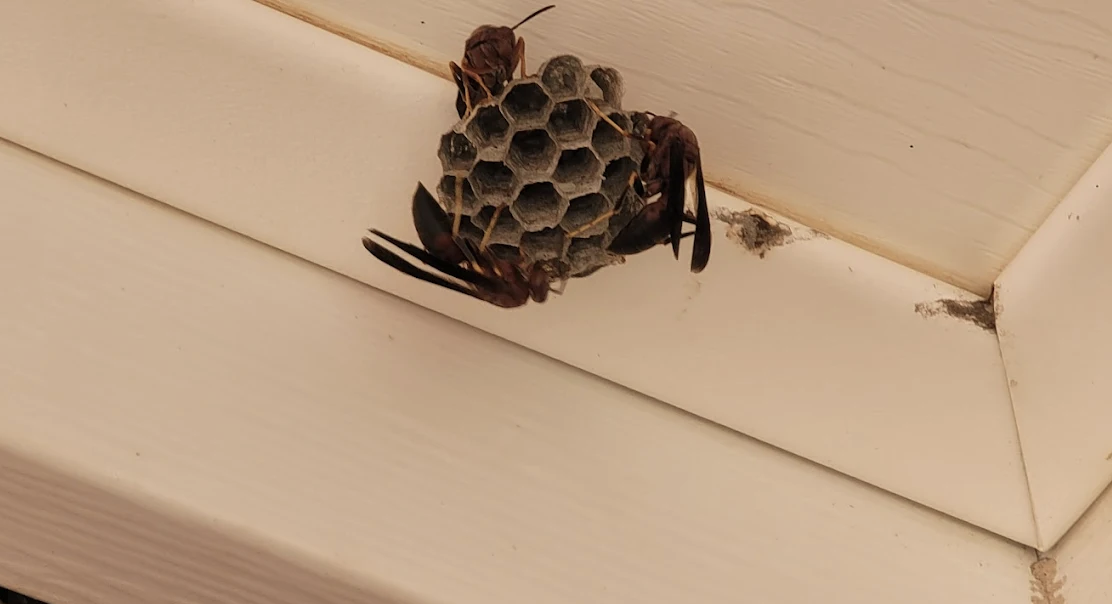
Several species are common in the region, including paper wasps, yellowjackets, and mud daubers. Paper wasps often build umbrella-shaped nests under eaves, porch ceilings, deck railings, and other protected outdoor structures. Yellowjackets typically build nests in the ground or inside wall voids and can become aggressive if their nest is disturbed.
Mud daubers are solitary wasps that create tube-shaped nests made of mud, often attaching them to exterior walls, garages, and sheds. While mud daubers are generally less aggressive than other wasp species, their nests can still become a nuisance around entryways and outdoor living spaces.
Because the CSRA has a long warm season, wasp activity can begin in early spring and continue well into the fall. Homes with covered porches, outdoor lighting, and sheltered rooflines often provide ideal locations for nests to develop.
Regular exterior inspections and early nest removal can help prevent stinging insect populations from growing around the home.
How Pests Enter Homes
Many pest infestations begin when insects find small structural gaps that homeowners may not notice. Cracks in foundations, gaps around windows and doors, openings around plumbing lines, and attic vents are all common entry points.
Garage doors that do not seal properly against the ground can also allow pests to enter. In Augusta and North Augusta, where many homes are built with crawl spaces instead of basements, moisture underneath homes can attract insects and create ideal nesting conditions.
Regular inspections and sealing these openings can significantly reduce the chances of pests entering a home.
The Importance of Preventative Pest Control
In warm climates like the CSRA, pest problems rarely disappear on their own. Many insects reproduce quickly, and once a colony becomes established inside a structure it can become difficult to eliminate.
Preventative pest control focuses on identifying entry points, treating the exterior of the home, and monitoring pest activity throughout the year. Regular service helps create a protective barrier around a property and reduces the likelihood of infestations developing indoors.
Because the pest pressures in Augusta, North Augusta, Evans, Martinez, Grovetown, and Aiken are influenced by similar environmental conditions, many homeowners benefit from year-round pest control programs designed specifically for the region. We offer general pest control treatments on a bi-monthly or quarterly basis depending on the pest pressure at your home.
Protecting Your Home From Pests in the CSRA
Pest activity is a normal part of life in the Augusta area, but homeowners can still take steps to reduce the likelihood of infestations. Sealing entry points, reducing excess moisture around the home, storing food properly, and maintaining a clean environment all help discourage pests.
Regular pest control service can also help identify potential problems early and prevent infestations from becoming more serious.
Stokes Mosquito and Pest provides pest control services throughout Augusta, North Augusta, Evans, Martinez, Grovetown, Aiken, and surrounding communities across the CSRA.
FAQ: Pest Control in the Augusta Area
What pests are most common in the CSRA?
Common pests in the Augusta area include ants, cockroaches, spiders, termites, fleas, mosquitoes, and stinging insects like wasps and yellowjackets. The region’s warm climate allows many of these pests to stay active for much of the year.
Why are there so many bugs in Augusta and North Augusta?
The humid subtropical climate, consistent rainfall, and long warm seasons create ideal breeding conditions for insects and other pests.
How often should homes receive pest control treatments?
Our solutions are labeled to last up to 90 days. We recommend quarterly or bi-monthly treatments to help maintain a protective barrier around the home and reduce the chance of infestations.
Do newer homes in Evans and Grovetown still experience pest problems?
Yes. Even newly built homes can experience pest issues. Construction can disturb existing insect habitats, which sometimes pushes pests toward nearby houses.
