

Common Ants in Augusta and the CSRA: What Homeowners Need to Know
Ants are one of the most common pest problems homeowners face throughout the Augusta area and surrounding CSRA communities. Whether you live in Augusta, Evans, Martinez, Grovetown, North Augusta, or Aiken, chances are you’ve encountered ants at some point inside your home or throughout your yard. While many ant species are harmless outdoors, some can become persistent nuisances, contaminate food, damage property, or make outdoor spaces uncomfortable to enjoy.
The warm climate, mild winters, and long growing season throughout the CSRA create ideal conditions for ant populations to thrive nearly year-round. Understanding the most common ant species in our area can help homeowners identify potential problems early and know when professional treatment may be the most effective solution.
Argentine Ants
Argentine ants are among the most common nuisance ants found throughout the Augusta area. These small, light brown ants often invade homes in search of food and moisture, particularly during periods of heavy rain, drought, or extreme temperatures.
One of the reasons Argentine ants can be so frustrating is their colony structure. Unlike many ant species that have a single queen, Argentine ant colonies often contain multiple queens and can spread across large areas. What appears to be a small infestation inside the home may actually be connected to a much larger colony hidden throughout the landscape.
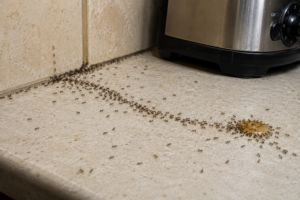
Homeowners in Augusta, Martinez, and Grovetown frequently notice Argentine ants forming long trails along foundations, sidewalks, kitchens, and bathrooms. Because of their large colony size, eliminating the ants you can see rarely solves the underlying problem.
Odorous House Ants
Odorous house ants are another common pest throughout Evans, North Augusta, Aiken, and surrounding communities. These tiny dark ants get their name from the strong odor they release when crushed, which many people describe as smelling similar to rotten coconut.
Odorous house ants are especially attracted to sweet foods and frequently invade kitchens, pantries, and food storage areas. Outdoors, they often nest beneath mulch, landscaping materials, rocks, and decorative features around the home.
Because these ants can relocate their nests quickly when disturbed, homeowners often find that store-bought sprays provide only temporary relief before the ants return days or weeks later.
Fire Ants
Few pests are more recognizable throughout Georgia and South Carolina than fire ants. These aggressive ants build large mounds in lawns, flower beds, playgrounds, athletic fields, and common areas throughout residential neighborhoods.
Fire ants are especially common in Augusta, Grovetown, Evans, and Aiken, where open grassy areas and warm soil conditions provide ideal nesting environments. After periods of rain, homeowners often notice new mounds appearing seemingly overnight as colonies expand and establish new nesting sites.
Beyond being a nuisance, fire ants pose a legitimate concern for families and pets. Their painful stings can make outdoor activities uncomfortable and, in some cases, may trigger allergic reactions. Fire ant colonies can also damage landscaping and create hazards in areas where children and pets play.
Carpenter Ants
Carpenter ants are among the largest ants homeowners encounter in the CSRA. Unlike termites, carpenter ants do not consume wood. However, they tunnel through wood to create nesting galleries, which can contribute to structural damage over time if infestations are left untreated.
These ants are commonly found around homes in Martinez, Evans, North Augusta, and Aiken, particularly in areas with mature trees and moisture-damaged wood. Carpenter ants are often attracted to damp wood around windows, rooflines, decks, crawl spaces, and exterior trim.
Many homeowners first notice carpenter ants when they see large black ants indoors or discover small piles of wood shavings near nesting areas. Because carpenter ants are frequently associated with moisture issues, identifying and correcting the source of excess moisture is often an important part of the treatment process.
Pavement Ants
Pavement ants are commonly found nesting beneath driveways, sidewalks, patios, and concrete slabs. While they typically do not cause structural damage, they can become a nuisance when colonies expand and begin foraging inside the home.
These ants are attracted to a wide variety of food sources and can quickly establish trails through kitchens, garages, and living spaces. Their ability to nest beneath hard surfaces often makes locating the colony more difficult than homeowners expect.
Why Ants Are So Common Around Augusta Area Homes
The climate throughout Augusta, Evans, Martinez, Grovetown, North Augusta, and Aiken provides ideal conditions for ant activity. Warm temperatures, seasonal rainfall, irrigated landscapes, mulch beds, and mature vegetation all create favorable environments for ant colonies to establish and grow.
Weather patterns also play a major role in ant activity. During heavy rain, ants often seek higher ground and may move indoors. During periods of drought, they frequently enter homes searching for moisture. As a result, homeowners often experience sudden increases in ant activity following significant weather changes.
Don’t wait until ants have taken over. Contact us today!
What Homeowners Should Do
If you’re noticing ant activity around your property, there are several steps you can take to make your home less attractive to ants and help prevent infestations from growing.
- Store food in sealed containers whenever possible.
- Clean up crumbs, spills, and pet food promptly.
- Repair leaking faucets, pipes, and outdoor spigots.
- Trim shrubs and tree branches away from the home’s exterior.
- Keep mulch from being piled directly against the foundation.
- Inspect gutters and downspouts to ensure proper drainage.
- Seal cracks and gaps around doors, windows, and utility entry points.
- Monitor areas where ants are frequently appearing and note any trails or nesting activity.
These preventative measures can help reduce attractants and make it more difficult for ants to establish colonies around your home.
What Homeowners Should Avoid
Many homeowners unknowingly make ant problems worse while attempting to solve them. Avoid these common mistakes:
- Don’t spray every ant trail you see without identifying the species.
- Don’t disturb fire ant mounds by kicking, digging, or flooding them.
- Don’t rely solely on store-bought sprays for recurring infestations.
- Don’t ignore small ant problems, as colonies can grow quickly.
- Don’t leave food, sugary drinks, or pet food accessible for long periods.
- Don’t assume the ants you see represent the entire colony.
- Don’t overapply pesticides or combine multiple products without understanding how they work.
- Don’t wait until ants have spread throughout the home before seeking professional help.
Remember, the ants visible inside your home are often just a small fraction of a much larger colony hidden somewhere on the property. Successful ant control typically requires identifying the species involved and addressing the source of the infestation, not just the ants that happen to be visible at the moment.
Why Store-Bought Ant Products Don’t Always Work
Many homeowners become frustrated when ants return shortly after treatment. In most cases, the issue isn’t the product itself. It’s that the treatment never reaches the colony.
Many common ant species found throughout the CSRA maintain large colonies with thousands of workers and multiple queens. Surface sprays often kill only the ants that come into direct contact with the product while leaving the colony intact.
Different ant species also require different treatment methods. What works effectively for one species may have little impact on another. Without proper identification and targeted treatment, ant populations can continue to grow despite repeated DIY efforts.
Professional pest control focuses on identifying the species involved, locating nesting areas, and implementing treatment strategies designed to address the entire colony rather than just the visible ants.
Professional Ant Control Solutions
At Stokes Mosquito and Pest, most common ant species can be treated as part of our General Pest Control Service or through a standalone ant treatment program for homeowners experiencing specific infestations.
For homeowners dealing with fire ants, we also offer a Premium Fire Ant Treatment Program that provides year-round protection. Rather than simply treating visible mounds, this service is designed to help control fire ant activity throughout the property and reduce the likelihood of future infestations.
Whether you’re dealing with Argentine ants in Augusta, fire ants in Grovetown, carpenter ants in Evans, or recurring indoor ant problems in North Augusta or Aiken, professional treatment can help identify the source of the infestation and provide long-term relief.
Summary
Ants are a common part of life throughout the CSRA, but recurring infestations don’t have to become a permanent problem. Understanding the most common ant species in our area, practicing good prevention habits, and addressing infestations early can help protect your home and your family’s comfort.
If ant activity is becoming difficult to manage, professional treatment can provide a more effective and long-lasting solution, allowing you to enjoy your home and outdoor spaces with greater peace of mind.
